

This post is part of our participation in Blog Action Day 2010.
If you hadn’t heard, water is sort of important for our health… some even say we need it to live. Yeah, I guess this isn’t news to you. Hopefully, though, some of these cool water facts are. And hopefully they’ll help you to live smarter.
1. You are Full of Water: About 60% of your body weight is water and about 75% of your muscles are water.
2. Water is Critical to Weight Loss: “If people who are trying to loose weight don’t drink enough water, the body can’t metabolize the fat adequately.” Drinking water helps to improve your muscle tone.
3. Chlorine Kills: Chlorine is perhaps a leading cause of cancer and heart disease. “Putting chlorine in the water is like starting a time bomb. Cancer, heart trouble, premature senility, both mental and physical, are conditions attributable to chlorine-treated water supplies. It is making us grow old before our time by producing symptoms of ageing such as hardening of the arteries. I believe if chlorine were now proposed for the first time to be used in drinking water it would be banned by the Food and Drug Administration,” says biologist/chemist Dr. Herbert Schwartz.
4. Dirty Water Makes Us Sick & Kills Us… and Our Waterways Are Polluted:
- “The water and sanitation crisis claims more lives through disease than any war claims through guns.”
- Diarrhea is the “second leading cause of death among children under five globally. Nearly one in five child deaths – about 1.5 million each year – is due to diarrhea. It kills more young children than AIDS, malaria and measles combined.”
- “At any given time, half of the world’s hospital beds are occupied by patients suffering from diseases associated with lack of access to safe drinking water, inadequate sanitation and poor hygiene.”
- “80% of all diseases and sicknesses are water borne.”
- “65% of the world’s riverine ecosystems are ‘moderately to highly threatened'” from pollution (see link in subheading).
- “More than 80% of sewage in developing countries is discharged untreated, polluting rivers, lakes and coastal areas.”
5. We Get Water from More than Drinking:
- Our metabolism creates about 1/2 cup of water a day as it makes and uses energy.
- We also get water from food, especially fruits and veggies (another important reason to eat your fruits and veggies): “Fresh fruits and vegetables contain a lot of water. People who eat a lot of fresh fruits and vegetables can drink less water.”
Read Water Facts 6-10 on the Next Page…
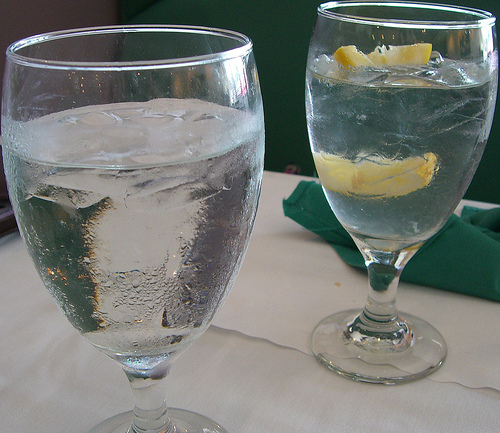
Photo Credit: M Kuhn






Hi Zach—
I’m glad you note the threat of waterborne illnesses is still very real. Indeed, there are millions of related deaths each year in developing countries. Sadly, children aged five and younger are the most common victims of unsanitary water.
Chlorine helps keep U.S. drinking water safe — it kills the germs that once claimed thousands of American lives every year. Chlorine has helped to virtually eliminate diseases like cholera and typhoid fever in the US and other developed countries.
Chlorine-based disinfectants provide a very important “residual disinfectant” level that helps prevent microbial re-growth, protecting treated water as it journeys from the treatment plant to the tap. Regarding its safety, chlorine and chlorine disinfection byproducts in drinking water are regulated to safe levels by the Environmental Protection Agency. In addition, chlorine isn’t classified as a known or possible carcinogen by the EPA, the National Toxicology Program (NTP) or the International Agency for Research on Cancer (IARC). I invite you to read the blog post we developed for Blog Action Day: Clean Drinking Water – Share the Chemistry. http://bit.ly/bl4ZEP
Best,
Mary
Mary Ostrowski
American Chemistry Council
Nice fact list, Zach. We should carry them around on plastic cards in our wallets, just in case.
No doubt Chlorine is toxic in larger quantities, but I believe it has probably saved more lives than it has put at risk.
Of course, Chlorine can bind with other elements (e.g., carbon, fluorine) to form CFCs (which destroy ozone and allow more UV radiation into the lower atmosphere) and other reactive compounds.
Perhaps this distinction should be made.