
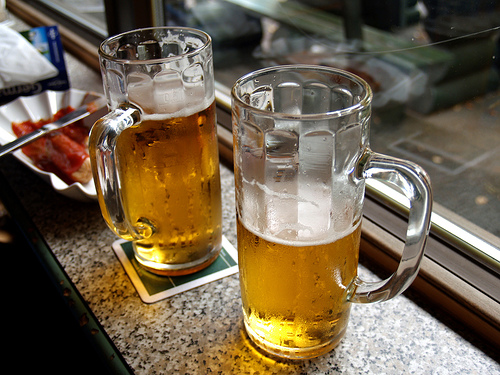
Who’s thirsty?
Between the barbecues, national holidays and beach vacations, cold beers become a necessity in many households over the summer months. As we pay more attention to the way our food is grown, harvested and transported, perhaps we owe it to the environment to be as vigilant with our beer. But how easy is it to find environmentally-conscientious breweries?
Beer brewing is not the most environmentally-friendly of activities, particularly regarding water usage. On average, six gallons of water are required to brew one gallon of beer – a ratio that must be drastically reduced in dry areas. Wastewater, carbon emissions and huge energy generators also contribute to the environmental sins of the industry.
But more breweries are taking notice of the eating public’s environmental awakening. While the biggest multinational breweries are beginning to make structural changes that promote sustainability, most of the greenest beers are (unsurprisingly) local and regional ones. Microbreweries are great agents of change because they interact with the communities that surround them. Their smaller size and community feeling make them more amenable to change, so it is easier to petition them and request more sustainable practices. Below are the top five eco-minded, North American mid-sized breweries:
1.New Belgium Beer (Distribution: Western U.S.)
This small-scale Colorado brewer takes a multilateral approach to its greening. The brewing kettles trap steam energy during the brewing process and reuse it. The facilities use solar and compressed florescent lighting. Shelving and other building materials are made from trees killed by invasive beetle species rather than virgin wood.
The company has also implemented a wastewater treatment process to reclaim used water. The methane generated from the treatment is then collected and used as an on-site generated alternative energy. In addition to steam and methane energy, New Belgium was the first wind-powered brewery back in 1999. They continue to use wind-powered energy today. As if all of this weren’t enough, New Belgium donates 1% of all revenue to environmental causes.
2.Steamwhistle (Distribution: Canada)
This Canadian brewery wins for recycling and material waste-reduction efforts. Their logo is etched onto the glass bottles, freeing the facility of paper-wasting labels and toxic paper dyes and glosses. All packaging is made from recycled materials and the bottles themselves are recyclable. They can be returned to the facility via drop-offs at beer stores, washed and reused up to 30 times. Even the grains are recycled: spent hops are sent to local farmers to be used as animal feed.
Energy efficiency is also a priority. Steamwhistle uses primarily steam heat and fuels its delivery trucks with 100% biodiesel. They recently built a new brewhouse with 30% more efficiency. Additionally, Steamwhistle participates in an alternative refrigeration method that is specific to the Ontario area: deep lake water cooling. Ice cold water from the bottom of Lake Ontario is piped throughout the facility and then back into the lake, providing enough chill to forgo air conditioning.
3. Long Trail Brewing Company (Distribution: New England and Mid-Atlantic)
Vermont-based Long Trail makes a line called Eco-Brew that is created using a multilateral approach much like Breweries #1 and #2. The “spent mash” from brewing is sent to area farmers as cow feed. The kettle steam is recovered and stored for energy and heating. Wastewater is treated and recycled, reducing water usage. Their on-site vehicles are powered by biodiesel from their pub’s kitchen grease and they invest in local alternative energy cooperative, Cow Power, which – in addition to providing alternative energy – provides financial support to independent dairy farmers who suffer from competition with corporate farms.
4. Sierra Nevada Brewing Company (Distribution: U.S.)
Sierra Nevada uses fuel cell technology to power their brewing and has won California’s highest award for waste reduction. In 2006, their website says, they diverted 97% of their total waste from landfills through a combination of waste reduction and creative recycling. Sierra Nevada also recovers both steam heat and carbon dioxide for reuse in the facility. Like the other eco-minded breweries, Sierra Nevada treats and reclaims its wastewater and sends its spent mash to local farms.
5. Brooklyn Brewery (Distribution: Eastern U.S., Canada, Western Europe, Turkey, Japan and Hong Kong)
The Brooklyn Brewery was the first New York City company to convert to 100% wind-powered energy back in 2003. They continue to fuel their brewing with wind.
Honorable Mention: Lambic Beer
Made in the Senne Valley of Belgium during the time of year that wild yeast travels in the wind. Instead of brewing with an industrial kettle only, this beer is crafted by allowing giant barrels of mash to sit outside exposed to the wild yeast and letting nature take its course. Truly, a naturally-fermented beer.
Image Credit:k.ivoutin under a creative commons license.



Mmmm…. beer. Thanks for all the info and reviews! I’ve long been a fan of New Belgium and Sierra Nevada brews. My boyfriend and I recently started brewing our own organic beer at home, which is pretty easy with a kit from Seven Bridges Cooperative in nearby Santa Cruz. There’s nothing greener than an organic homebrew in a re-used bottle! :)
Sierra Nevada Brewing Co. not only has fuel cells that generate 1MW of electricity, but they have recently finished installing the largest privately owned solar array in the US (possibly the world). And they are adding more, to bring the total up to around 7+ acres of solar panels. When this second phase of the solar project is completed (projected to be this year) Sierra Nevada Brewing Co. will be 97% electrically self sufficient.
how does mateveza not make the list
Thanks for the comments guys! Mateveza and other organic beers are delicious and better for you, but they are not necessarily more sustainable. In fact, there is not a single producer of organic hops in the United States, so all U.S.- brewed organic beers rack up emissions by importing their hops from abroad. My personal favorite, Mill St. Organic Lager uses hops from New Zealand, for example. Mateveza opts to use non-organic hops that are domestically grown, which I applaud as a locavore but also consider a bit of a cheat.
Similarly, Samuel Smiths brewery (U.K.) has produces fantastic organic lager, excellent on a hot summer day. This, however, does not make it a sustainably brewed beer! Organic (thus, possibly containing less unhealthy bits, yes…) but sustainable… well, I’m drinking it here in the U.S., so probably not (how did all these pints of lager get all the way here from Great Britain, after all??).
Anywho, thanks for the recommendations that I’ll be sure to enjoy!
Steamwhistle FTW
what a poorly researched article. I mean can you be serious about the honorable mention for Lambics? Just wrong, wrong, wrong. Peace of advise, if you don’t know what you’re writing about… don’t write about it!
I have to agree with Megan: even greener are the beers you brew at home! You get to control exactly what goes into it, you can re-use the bottles, and you don’t have to worry about the emissions associated with transporting 95% water (well, 89% water with some of home-brews!) from the brewery to your front door.
That said, while you’re waiting the 3-4 weeks for your home brew to bottle age, the beers in this article will keep you going in the meantime! :)
Crannog ales from British Columbia grow their own grains and hops and have a completely closed loop as their grains are eaten by pigs. Their beer is absolutely amazing.
http://www.crannogales.com/
Don’t forget local microbrewers. In St Louis, we drink a lot of Schlafly beer, which is brewed and bottled less than two miles from our house. We also buy beer in growlers–reusable glass jugs, whenever possible.
Although, when I can’t get Schlafly, I do love New Belgium. I met their director of sustainability last summer, and that guy is the real deal. They’re probably the leaders in greening the industry. Their Mothership Wit wheat (certified organic) is awesome.
Anderson Valley Brewing company is ALL SOLAR!
They also make the finest amber ale ever.
Boont!!!!
>this beer is crafted by allowing giant barrels of hops to sit outside during the wild yeast season and letting nature take its course
lol! That it so utterly false. Presents a funny mental picture though.
1. Organic doesn’t mean sustainable.
2. Homebrewing isn’t all that efficient. Your supplies get shipped in smaller quantities to more locations. If you use a wort chiller you waste tons of water compared to the big brewers. You simply can’t approach the economies and efficiencies of scales larger places get.
3. Lambics… If you simply leave a giant barrel of hops sitting outside you will get a giant barrel of slightly older hops sitting outside. Maybe they’ll be damp if it rains. Plants don’t magically turn into beer.
Lambics are brewed just like any other beer. They are mashed, boiled, infused with hops, and then fermented. The difference is that during the fermentation they are inoculated with bacteria (wild or cultured) in addition to yeast.
Sad, sad, sad. Just an article written by someone with just a hint of what goes on. Organic malt has to travel halfway across the country in most instances and as such isn’t very green. One of the beers cited “Mill Creek” is an Anheuser Busch product and even though it’s certified organic do you folks for a moment think the rest of their operation is green???
I’m sure you all know that what can’t be certified organic and organic rules at the moment stand at 95% that almost all beer has non organic ingredients in so called organic beer. In this day and age where the cost of ingredients is sky high organic goods are even more through the roof…
Though the ’cause is honorable’ the reality is it’s never going to be as green as you’re led to believe.
Industry professional 16 years.
Water can’t be certified organic and as such don’t you think organic beer is sort of a sham on it’s face….
Your honorable mention of Lambic is, um, well, it’s just…wrong. In so many ways. If you could please site the reference where that trainwreck of misinformation went off the tracks I’d appreciate it.
Also, New Belgium is the 9th largest brewery in the US, far from small. Green yes, but not small.
Unfortunately, after reading the totally innacurate information on lambics, it puts in to question the validity of anything else in this article. Next time, have somebody who knows something about beer right the piece rather than regurgitating press releases from the breweries and capping it off with proof that you don’t understand beer.
The funniest thing about the honorable mention is that you only have to go to wikipedia to realise that not only is the author 100% wrong… she made the damn thing up. Lambic is in no way more sustainable than any other beer shipped in from outside the country.
In addition, while I can appreciate all that NB and Sierra and the rest of the list are doing to make their beers more sustainable, as a professional brewer, I can tell you they are not coming close to the level of sustainability inside the brewery that you see at Bud, Coors, or Miller. But the most sustainable beer, by far, is beer that you buy at your local brewery. Anything that is put into glass and is shipped is highly unsustainable in comparison to anything you might drink at the local brewpub or growler you take home from said brewpub.
Hi everyone. I appreciate you stopping by to have a look at my article. A few points:
1. I agree that organic beer and sustainable beer are not the same thing. This article describes sustainable beer, not organic beer. I do not mention organic beer. Read the article first, comment thereafter.
2. I got my information about Lambic beer from a friend who grew up in the Senne Valley and told me about the traditional, homebrewing methods of his grandparents. I have linked a corroborating article from the New York Times. It is likely that methods have changed since then and I apologize for not specifying that I was referring to the old-fashioned system. I understand that commercial “lambic-style” beers are made with corn syrup in the fruit puree and closed, climatized brewing. Although I imagine that many people would not consider this lambic beer at all.
Rather than a detailed article on the process of making commercial lambic beer, this was a brief tidbit with a link so that anyone interested had a source for more extensive information. From the NY Times:
“Instead of managing fermentation, the lambic brewer leaves it to nature. Wild yeasts, along with just about anything else in the air, shepherd the brew on its path to beerhood, converting barley and wheat sugars into alcohol, producing fascinating and, dare I say, wine-like beers.”
I have obviously tapped into a subculture that is passionate, as also mentioned in the NY Times: “As in any community of passionate devotees, serious debate rages over what constitutes authentic lambic beer.” It seems that my article is now passing between members of said subculture, which is great. However, some of their comments have not been written in the spirit of discourse. I dislike engaging them, but I dislike the idea of our readers thinking that I don’t fact check even more. Please, if you have any doubt, check the links that accompany this article. Thanks!
Meredith, to build on the comment of “Hoppy” above, while the intent of your article and most of the facts are commendable, your lambic section belies a stunning lack of research.
For starters, hops are only a flavoring agent in beer, and not a source of fermentable sugar. A “barrel of hops” left outside would yield nothing over time but a barrel of rotten hops. Wheat and malted barley are the sources of the alcohol in lambic. These are steeped in warm water to ‘mash’ out the sugars and then boiled in a kettle much like any other beer.
And while it is true that they are ‘spontaneously’ fermented by ambient microorganisms, this generally occurs over the course of a day or so in shallow “coolships”, often located in the attic of the brewery, where vents can be opened to promote air circulation. However, the rooms in which this has been done for years have accumulated many of the desirable micro-organisms, so the notion of wild yeast “blowing in on the wind”, while romantic, is largely inaccurate. And the resulting fermenting beer is allowed to mature in barrels in the warehouse.
As for the commenters – can you really claim that homebrewing is ‘green’? Aren’t you using copious water from the local supply? Don’t you order ingredients from commercial suppliers who have had them shipped to their facility, and then to you? I am a homebrewer myself, and think there are many great things about it, but this argument doesn’t seem to stand up.
Keep up the good work, Meredith – would love to see a follow-up with a fact-based description of lambic, which truly does have some regional and sustainable qualities to celebrate and which, like many similar products, is all too close to extinction!
Whoops. I failed to read Meredith’s own comment before posting my own.
Sorry, but I must intensify my condemnation of the lambic section. Meredith, if you had even read (or rather comprehended) the well-written Asimov article you linked to, you would have avoided your most egregious factual blunders.
To suggest that the critical commentary is due to the opinions of a ‘sub-culture’ or to insinuate that there is some dispute or debate on the facts is simply undefensible. You in fact did not do your basic research and for that you should not be forgiven.
A full Lambic article, please! As your penance, at least. You are lucky we don’t prescribe an expiatory pilgrimage to the Payottenland to fully expurgate your sins.
hi koelschip – thank you for engaging in a real criticism. now i understand the problem: i said hops and i meant mash or wort. i see now why everyone is getting so upset. of course hops won’t do anything when left outside! this was merely a copywriting error – i apologize.
i suggested that it was a subculture because the comments all have a similar tone and come in batches, which is something you are not privy to as a reader – 4 in one day, then 3 days of silence, etc. follows the pattern of something that is being passed around.
i have taken you up on your suggestion and written a repentant post on how to make lambic beer, although if you must send me on a pilgrimage to Pajottenland surely I won’t protest!
I read your article and the comments to follow. I thought it did seem like the research was lacking like others have mentioned but I’d like to read your follow up on lambic beer. I can’t speak for others but I am very passionate about beer so when I read something that isn’t on point it does get under my skin a bit and that appears to be the case with others as well but I respect that you have looked to dig deeper. I thought it was good aside from the research or copyright error.